Why this matters
The leaks that cause the most damage are rarely the dramatic ones. A sudden drip during a storm gets noticed and addressed. It's the slow, hidden leak — the one that's been wicking moisture into the decking and framing for months — that does the real structural and mold damage, because nobody knew to look for it. By the time a ceiling stain becomes visible, water has often already traveled along a rafter or the top of the drywall for a distance, following gravity and the path of least resistance rather than falling straight down from the entry point. That's the single most important thing to understand before you go looking: the visible sign and the actual problem are often in different places.
Where hidden leaks usually start
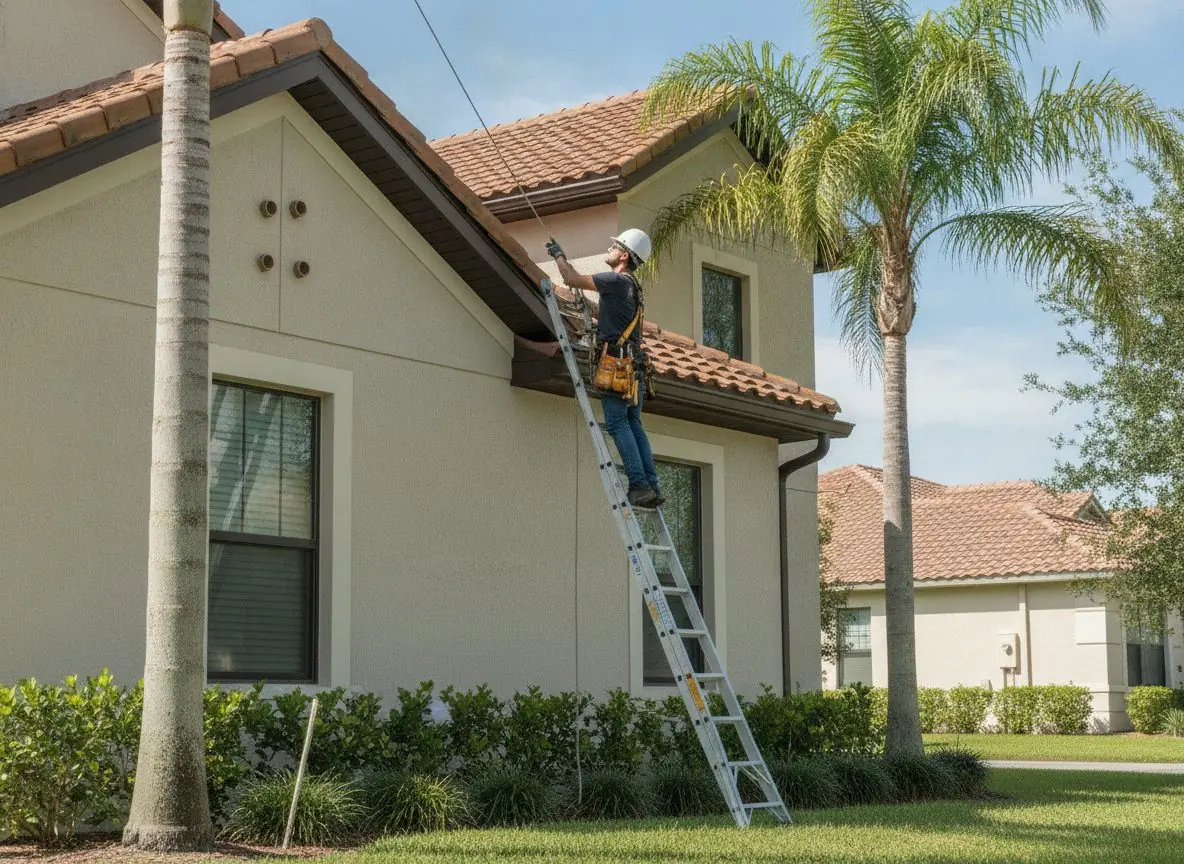
Roof penetrations are the most common failure points, not the open field of shingles or tile. Flashing around chimneys, skylights, vent pipes, and roof-to-wall junctions relies on sealant and metal work that degrades over years of Florida sun and rain — well before the surrounding shingles or tile show any wear. Valleys, where two roof planes meet, concentrate water flow and take more wear than flat sections. And on older roofs, nail pops or fastener back-out can create small entry points that let water in slowly, long before any shingle actually goes missing.
Signs to check, room by room
- Attic: The earliest and most reliable place to look. Check for dark staining on rafters or the underside of the roof deck, compressed or discolored insulation, and any daylight visible through the deck — especially near penetrations and valleys.
- Ceilings and upper walls: A faint yellow-brown ring, even a small one, means moisture has been present — it doesn't need to be actively dripping to indicate a problem. Check closets and corners, not just open rooms, since these get checked less often.
- Around light fixtures and vents: Staining or a slightly sagging texture around a ceiling fixture is one of the more common early signs, since fixtures and vent boots are roof penetrations from the outside.
- Exterior walls near the roofline: Peeling paint, bubbling, or a musty smell near where an exterior wall meets the roof can mean water is getting behind flashing at a wall intersection.
- Smell, not just sight: A persistent musty odor in an upstairs room, even without a visible stain, is often the first sign of moisture that hasn't fully surfaced yet.
Why acting early matters more than it seems
A small, contained leak is a roofing repair. The same leak, left alone for a season, can mean replacing wet insulation, sections of drywall, and in worse cases, structural framing or sheathing — plus the mold remediation that comes with prolonged moisture exposure. In Central Florida's humidity, the window between "just started" and "expensive" is shorter than in drier climates, because trapped moisture doesn't dry out on its own the way it might elsewhere.
Recommended next step
If you've spotted any of the signs above — or you're just not sure and want to check before it becomes a bigger problem — an inspection that includes the attic, not just the exterior roof surface, is the only reliable way to trace a leak back to its actual source rather than guessing from a ceiling stain.
Request a Free Inspection