Why this matters
Net metering determines what you're credited for the solar power your system produces but doesn't use in the moment — power that gets exported to the grid instead of stored in a battery. It's a major factor in how quickly a solar system pays for itself, and the rules around it can change with state policy. Understanding the current rule, and the fact that it has been challenged before, helps you evaluate a solar proposal with realistic expectations instead of assuming today's terms are locked in forever.
How net metering works
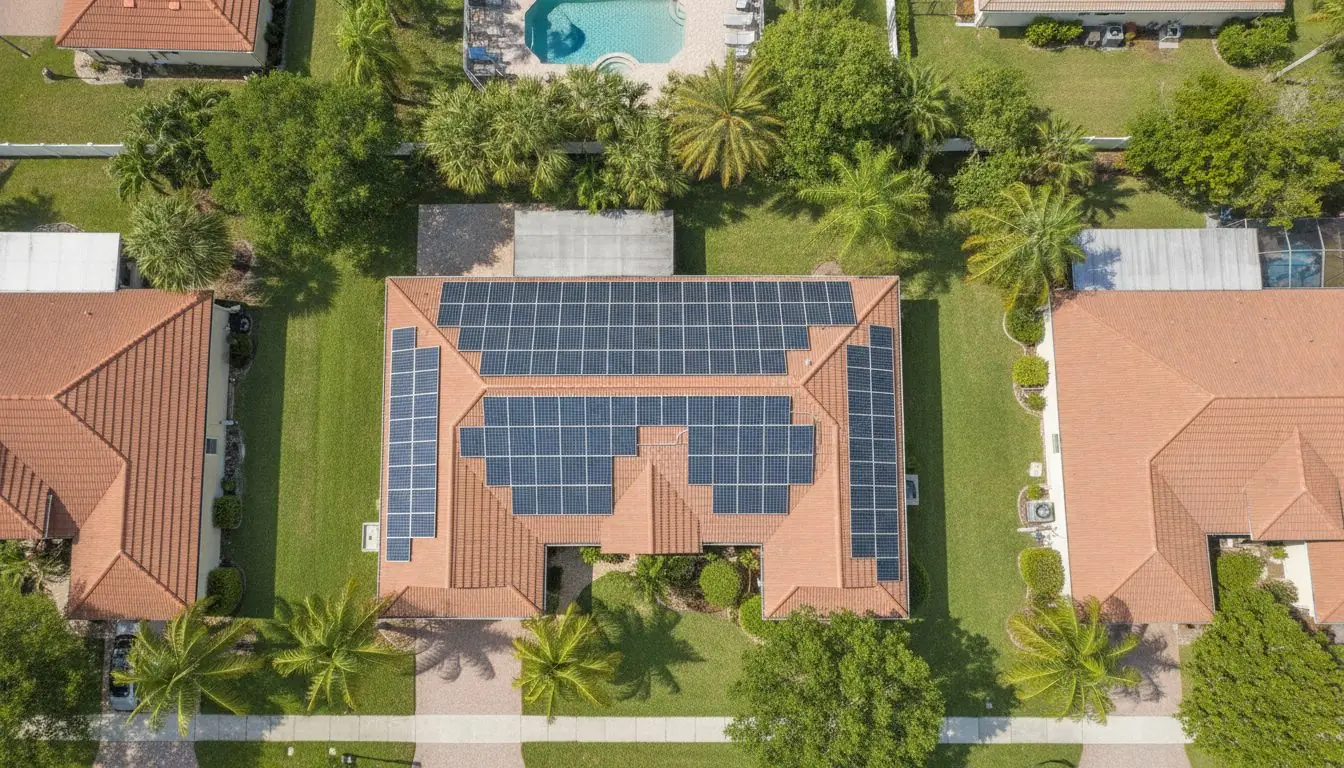
When your solar panels produce more electricity than your home is using at that moment, the excess flows out onto the utility grid, and your electric meter effectively runs in reverse, crediting you for that exported power. When your panels aren't producing enough (at night, or on a heavily overcast day), you draw power back from the grid as normal. At the end of the billing cycle, your utility nets your exports against your usage — hence "net" metering.
The current rule in Florida
As of today, Florida utilities regulated by the Florida Public Service Commission (FPSC) — including Florida Power & Light (FPL), Duke Energy Florida, and Tampa Electric (TECO) — operate under full retail-rate net metering. That means exported solar power is credited at essentially the same per-kWh rate you'd pay to buy electricity from the utility, rather than a lower "avoided cost" wholesale rate that some other states have shifted to. Full retail-rate crediting is one of the more favorable net metering structures available nationally, and it's a meaningful part of why solar payback periods in Florida tend to look attractive on paper.
This has been contested before — and could be again
Net metering policy is not something Florida has treated as settled. In 2022, the Florida legislature passed HB 741, a bill that would have significantly reduced net metering credit rates for new solar customers. Governor Ron DeSantis vetoed that bill, and full retail-rate net metering has remained in place since. That veto is a real, verifiable event — but it also demonstrates that net metering in Florida operates at the mercy of state-level policy debate, driven substantially by utility-company lobbying for reduced rates. No subsequent law has changed the current structure as of this writing, but homeowners and installers should treat this as an active policy area worth periodically re-checking, not a permanent guarantee baked into a 25-year solar payback projection.
What this means for your solar decision
A well-built solar proposal should show you the current net metering rate your utility applies, and a reputable installer should be upfront that this rate is set by state and utility policy, not guaranteed for the life of your system. If a proposal's payback math depends entirely on net metering never changing, ask what the numbers would look like under a reduced-credit scenario — a system that still makes sense under a more conservative assumption is a better bet than one that only works if today's rules never move. Pairing solar with battery storage also reduces your dependence on net metering altogether, since stored power you use yourself doesn't need to be exported and credited in the first place — see Home Battery Storage.
Recommended next step
Crownline keeps this page and every solar proposal current with the actual FPSC rule in effect, and will tell you plainly if that changes rather than quoting a stale number.
Request a Free Inspection