Why this matters
Roof coatings come up constantly in conversations with commercial building owners, usually framed as a cheaper alternative to full replacement. That's sometimes true and sometimes exactly the wrong call, depending on the actual condition of the roof underneath. A coating is a maintenance and protection layer applied over an existing roof membrane — it's not a new roofing system, and it can't substitute for one on a roof that's already failing structurally. Understanding that distinction is the difference between a coating that adds real years to a roof's life and one that just delays a much more expensive problem.
What a coating actually does
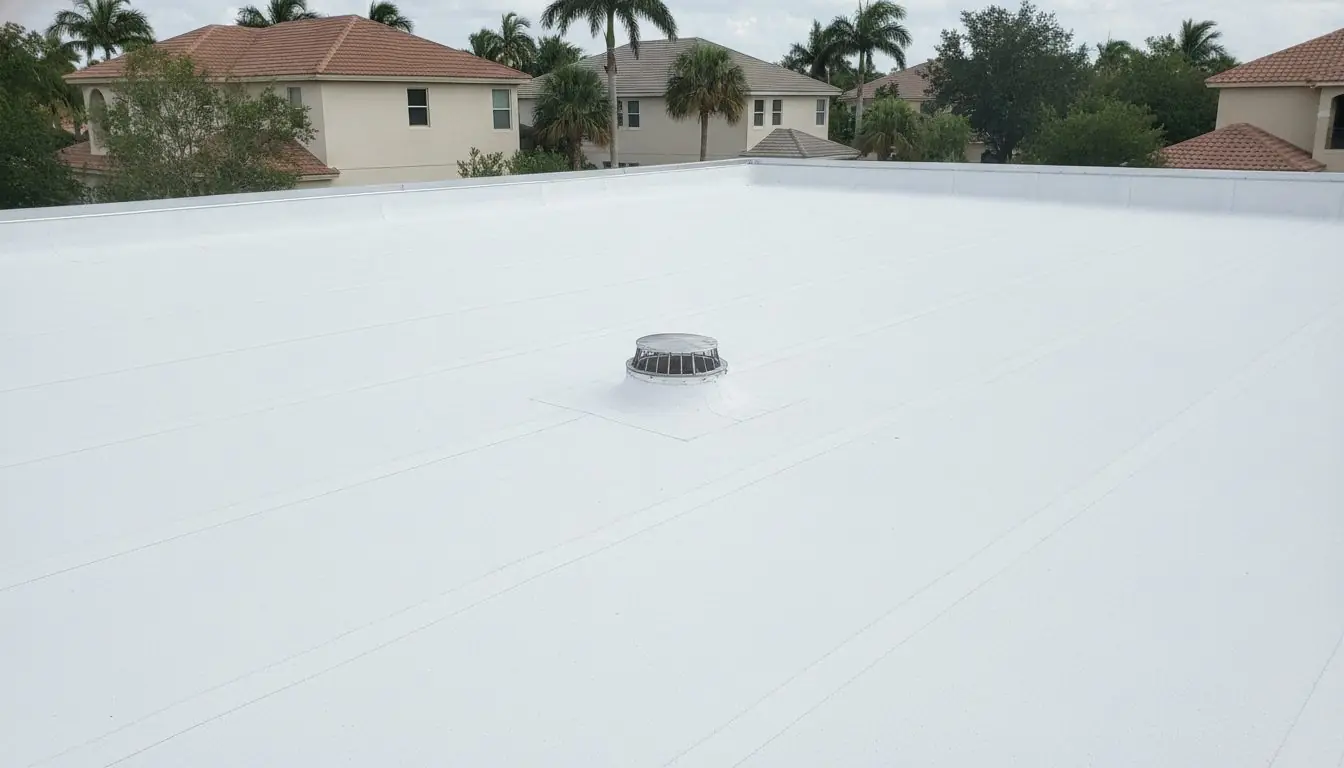
On flat and low-slope commercial roofs — TPO, EPDM, modified bitumen, and some metal roofs — a properly applied coating adds a reflective, weatherproofing layer that reduces UV degradation, helps manage surface-level ponding and minor cracking, and can lower roof surface temperature, which reduces thermal cycling stress on the membrane underneath. For a roof that's otherwise sound but showing surface wear, a coating can restore some of the protective qualities of a newer membrane and extend the interval before a full replacement is needed. It is a restoration and protection product, not a structural repair.
When a coating makes sense
- The existing membrane is intact, without widespread cracking, blistering, or membrane failure — surface wear, not structural failure.
- There's no significant trapped moisture in the insulation below the membrane, which a coating can't address and will seal in if present.
- Ponding water issues, if any, are minor and not evidence of a structural slope or drainage problem.
- The building owner's goal is extending the interval before replacement, with a realistic understanding of how much extra service life that buys — not eliminating the eventual need for replacement.
When a coating is the wrong call
- There's active leaking or evidence of wet insulation underneath the membrane — a coating traps that moisture rather than resolving it.
- The membrane itself has significant physical damage, seam failures, or has exceeded its practical service life.
- Ponding water is a drainage or slope problem rather than a cosmetic one — a coating doesn't change where water sits on the roof.
- A coating is being proposed specifically to avoid or delay diagnosing a known leak, rather than as planned maintenance on a sound roof.
This is also directly relevant to how the roof gets inspected and maintained afterward — see our flat roof maintenance guide for what ongoing care on these roof types actually involves.
Recommended next step
The right answer for any specific roof depends on an actual assessment of the membrane, insulation, and drainage — not a blanket rule about coatings being good or bad. A proper inspection determines whether a roof is a coating candidate or whether coating it would just delay a repair that's going to be needed regardless. For commercial and flat-roof buildings, that's the conversation to have before committing to either path — see our commercial roofing services.
Request a Free Inspection