Why this matters
"Metal roofing" gets used as if it's one product, but the fastening method is the whole story. Standing seam panels use raised, interlocking seams with concealed fasteners; corrugated (or exposed-fastener) panels are screwed directly through the panel face into the deck or purlins. That single difference drives most of the gap in cost, wind performance, and how long the roof actually lasts before it needs attention.
How the systems actually differ
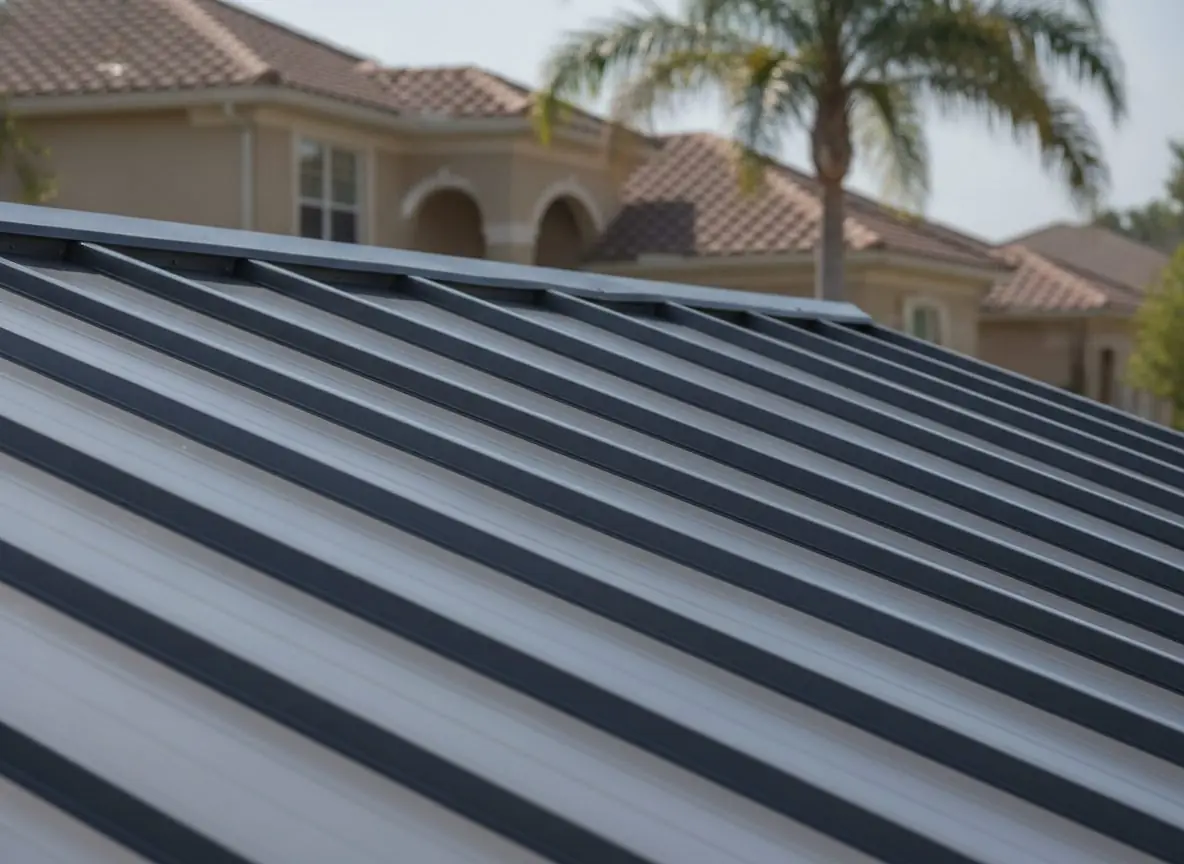
Standing seam panels connect through raised vertical seams that either snap-lock or mechanically seam together, with the fasteners hidden beneath the seam itself — no exposed screw heads for water or UV to attack over time. Corrugated and exposed-fastener panels are simpler and faster to install, using screws with rubber washers driven straight through the panel at regular intervals. Those washers are also the system's weak point: they harden and shrink with sun exposure over the years, and a roof with hundreds of exposed fasteners eventually needs someone re-torquing or replacing washers to stay watertight.
Cost and where each system is used
Corrugated/exposed-fastener metal is the more budget-friendly metal option, which is why it shows up so often on barns, warehouses, carports, and lower-cost commercial buildings. Standing seam costs more but is the standard choice for residential metal roofs, higher-end commercial buildings, and anywhere the owner wants decades of service without a maintenance visit every few years to check fasteners.
Wind performance and Florida code
Standing seam's concealed-fastener, interlocking design is why it consistently posts some of the highest wind-uplift ratings of any roofing system available, which is part of why insurers and coastal builders lean toward it in high-wind zones. Exposed-fastener panel can still meet Florida Building Code wind requirements when installed with the correct fastener spacing and pattern for the specific wind zone, but it has less margin — a few backed-out or missing fasteners matter more on this system than on standing seam. Our guide to metal roofing and wind uplift ratings goes deeper on how those ratings are tested and what they mean for your specific address.
Maintenance realities
- Standing seam: very low routine maintenance; occasional sealant check at penetrations and transitions, but no exposed fasteners to service.
- Corrugated/exposed-fastener: periodic fastener inspection and washer replacement is a real, expected maintenance item — budget for it rather than being surprised by it.
- Both: panel-to-panel and roof-to-wall flashing details are where leaks actually start; the panel type matters less than the installer's attention to those transitions.
Recommended next step
For a home or a building you plan to hold onto, standing seam is the stronger long-term investment despite the higher upfront cost. For lower-budget or utility structures where decades-long, maintenance-free service isn't the priority, exposed-fastener corrugated panel remains a legitimate, code-compliant option as long as it's installed and maintained correctly.
Request a Free Inspection