Why this matters
Flat and low-slope commercial roofs don't use shingles — they use single-ply membranes or built-up asphalt systems that behave very differently from residential roofing. Choosing the wrong system for your building's use, roof traffic, and drainage can mean a shortened service life or recurring seam failures. Understanding the real tradeoffs between TPO, EPDM, and modified bitumen helps you evaluate a bid intelligently instead of just comparing price per square.
TPO (Thermoplastic Polyolefin)
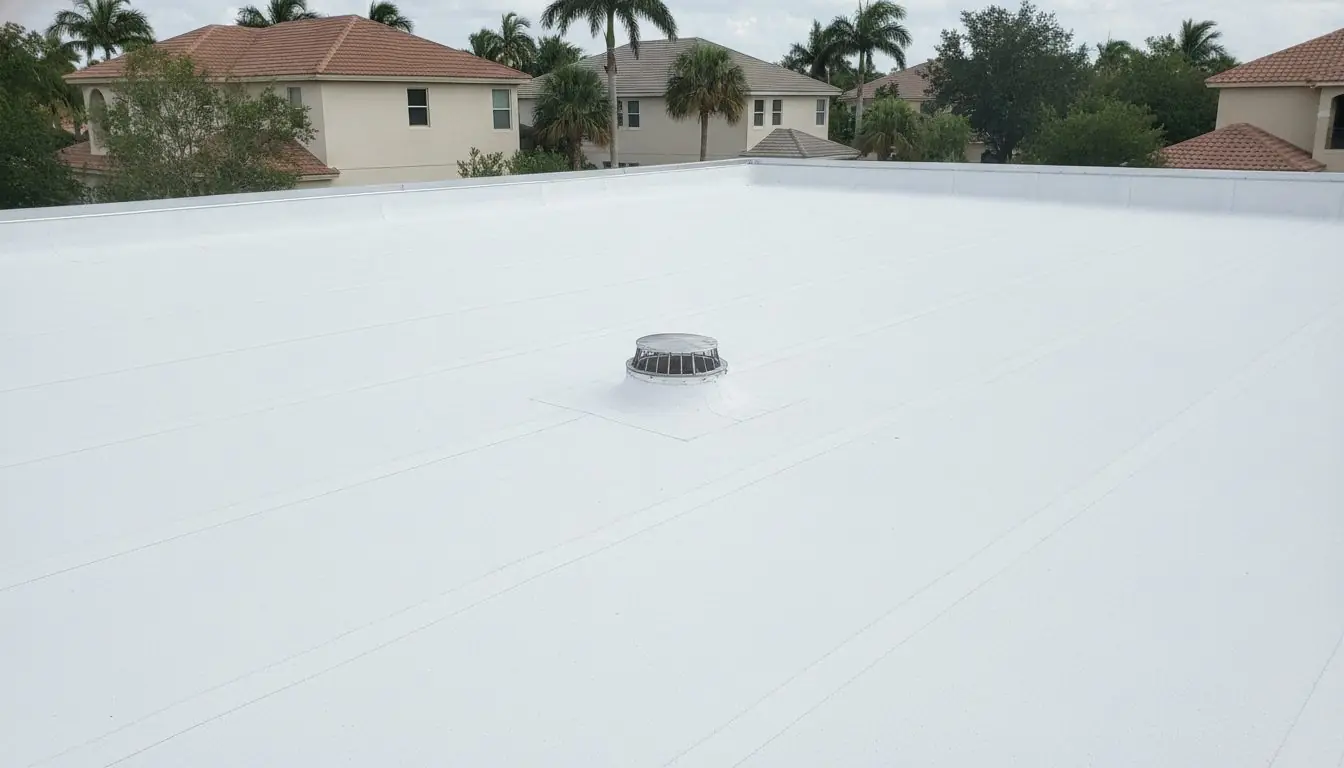
TPO is the most widely installed low-slope commercial roofing membrane today, typically installed in large single-ply sheets and heat-welded at the seams.
- Reflective white or gray surface reduces roof surface temperature and cooling load — a real consideration for Central Florida's summer heat gain.
- Heat-welded seams create a strong, continuous bond when installed correctly, but seam quality is highly dependent on installer skill and equipment calibration.
- Typical service life runs in the 20-30 year range depending on membrane thickness (mil rating) and installation quality — thicker membranes generally hold up better to foot traffic and UV exposure.
- Good fit for buildings wanting energy-cost benefits from a reflective roof and a lower material cost than PVC alternatives.
EPDM (Ethylene Propylene Diene Monomer)
EPDM is a synthetic rubber membrane with the longest field track record of the single-ply options, typically installed in black (though white EPDM exists).
- Seams are traditionally adhered with liquid adhesive and seam tape rather than heat-welded, which some crews find more forgiving to install correctly in the field.
- Excellent flexibility and UV/ozone resistance over decades of real-world use, with a track record stretching back further than TPO's.
- Black EPDM absorbs more heat than reflective TPO, which can matter for cooling costs on buildings without significant roof insulation.
- Often a strong fit for buildings prioritizing long-term membrane durability and proven field performance over reflectivity.
Modified Bitumen
Modified bitumen is an evolution of traditional built-up roofing (BUR) — asphalt reinforced with polymer modifiers (APP or SBS) and reinforcing fabric, installed in rolled sheets, either torch-applied, hot-mopped, or self-adhered.
- Multiple-ply installation (often a base sheet plus a cap sheet) gives it a thicker, more puncture-resistant profile than single-ply membranes — a real advantage on roofs with heavier foot traffic or mechanical equipment.
- Torch-applied installation requires strict fire-safety protocols on occupied buildings; self-adhered and cold-applied options avoid open flame during installation.
- Performs well combined with a granulated or reflective cap sheet, and integrates well with recover/re-roof projects over existing built-up systems.
- Often the right call on older buildings already built with a BUR assembly, or where extra puncture resistance matters more than reflectivity.
Choosing between them
The right system depends on your building's roof traffic, existing roof assembly, drainage, energy goals, and budget — not a single "best" answer across the board. We inspect the existing roof, check drainage and insulation condition, and recommend a specific system and mil/ply thickness in writing, rather than defaulting to whichever system is easiest to install.
Recommended next step
If you're planning a re-roof or evaluating a bid you've already received, we'll do a roof assessment and give you a straight comparison of which system fits your building — including a maintenance plan once it's installed (see our flat roof maintenance guide).