Why this matters
Central Florida sees tropical storms, hurricanes, hail, and straight-line wind events nearly every year, and a damaged roof is usually the first thing homeowners notice afterward. The instinct is to assume "storm damage" and "covered damage" mean the same thing. They don't always. Whether a specific roof is covered depends on your policy's wording, your roof's age and condition before the storm, and how the damage is documented — and only your insurance carrier can make the actual coverage decision. Crownline Roofing is a licensed contractor, not a public adjuster or an insurance company, so nothing here is a promise about what your policy will pay. It's a starting point for understanding the conversation you're about to have with your insurer.
What's typically covered
Most Florida homeowners (HO-3) policies cover roof damage caused by a sudden, identifiable event — wind, hail, a fallen tree limb, or debris impact during a named storm. If a storm rips shingles off, cracks tile, dents a metal panel, or opens a hole that lets water in, that is the kind of "sudden and accidental" damage most policies are written to address. Coverage generally responds fastest when:
- The damage can be tied to a specific storm date and a documented wind or hail event in your area.
- The roof was in reasonable condition before the storm — not already worn out, under-maintained, or past its expected service life.
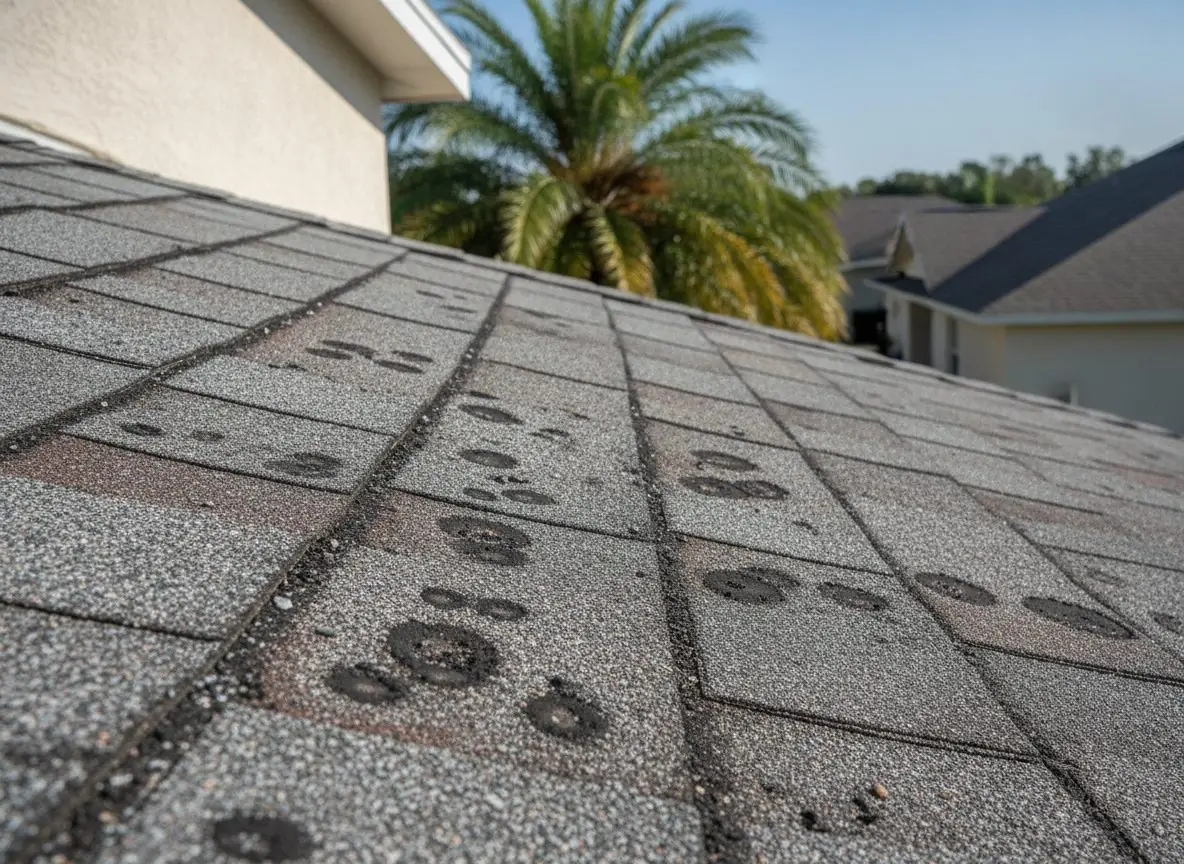
- The damage is visible and photographable: missing or lifted shingles, cracked tile, punctures, granule loss concentrated in a pattern consistent with hail, or exposed underlayment.
- Interior water intrusion is clearly linked to the roof breach, not a pre-existing plumbing or condensation issue.
What's typically excluded or limited
This is where most disputes happen. Policies commonly exclude or limit damage attributed to:
- Wear and tear or age-related deterioration. A 22-year-old shingle roof that's simply worn out is a maintenance issue, not a storm claim, even if a storm was the moment someone noticed it.
- Lack of maintenance. Missing granules, rotted decking, or long-neglected flashing can be characterized as a maintenance failure rather than storm damage.
- Cosmetic-only damage. Some Florida policies include a cosmetic damage exclusion or endorsement specifically for metal roofing, meaning dents that don't affect function may not be covered even if they're storm-related.
- Separate wind/hurricane deductibles. Florida policies typically carry a distinct hurricane deductible (often a percentage of dwelling coverage, not a flat dollar figure) that applies instead of your regular deductible once a storm is officially designated a hurricane.
Many Florida policies also apply their own roof-specific rules based on roof age — including actual cash value (depreciated) settlement instead of full replacement cost once a roof passes a certain age.
How the coverage decision actually gets made
The insurance carrier — not Crownline, not any contractor, and not you — makes the final coverage determination. That decision typically follows this sequence: you file the claim, the carrier assigns an adjuster (or reviews contractor-submitted documentation), the damage is inspected and compared against your policy language, and the carrier issues an approval, partial approval, or denial in writing. A licensed roofing contractor's role in that process is to inspect the roof, document the damage thoroughly and objectively, and provide a written scope of repair — not to decide, promise, or guarantee what the carrier will pay. If you want someone to represent your interests directly in a coverage dispute, that's the role of a licensed public adjuster or an attorney, which is a different profession under Florida law than a roofing contractor. See our public adjuster vs. roofing contractor guide for that distinction.
What to do next
If you suspect storm damage, the most useful first step is a documented roof inspection — photos, notes, and a written scope — done as close to the storm date as possible, before any secondary damage (like additional rain intrusion) complicates the picture. From there, our step-by-step claim filing guide and damage documentation guide walk through the process in detail.
Request a Free Inspection