Why this matters
Central Florida homeowners deal with real hurricane-season outage risk, and a home battery is one of the few tools that keeps specific things running when the grid goes down — without a gas generator's noise, fuel logistics, or need to be outdoors during a storm. But a battery is also a real cost, and it isn't automatically the right add-on for every household. The honest answer starts with what you actually need backed up.
How home battery storage actually works
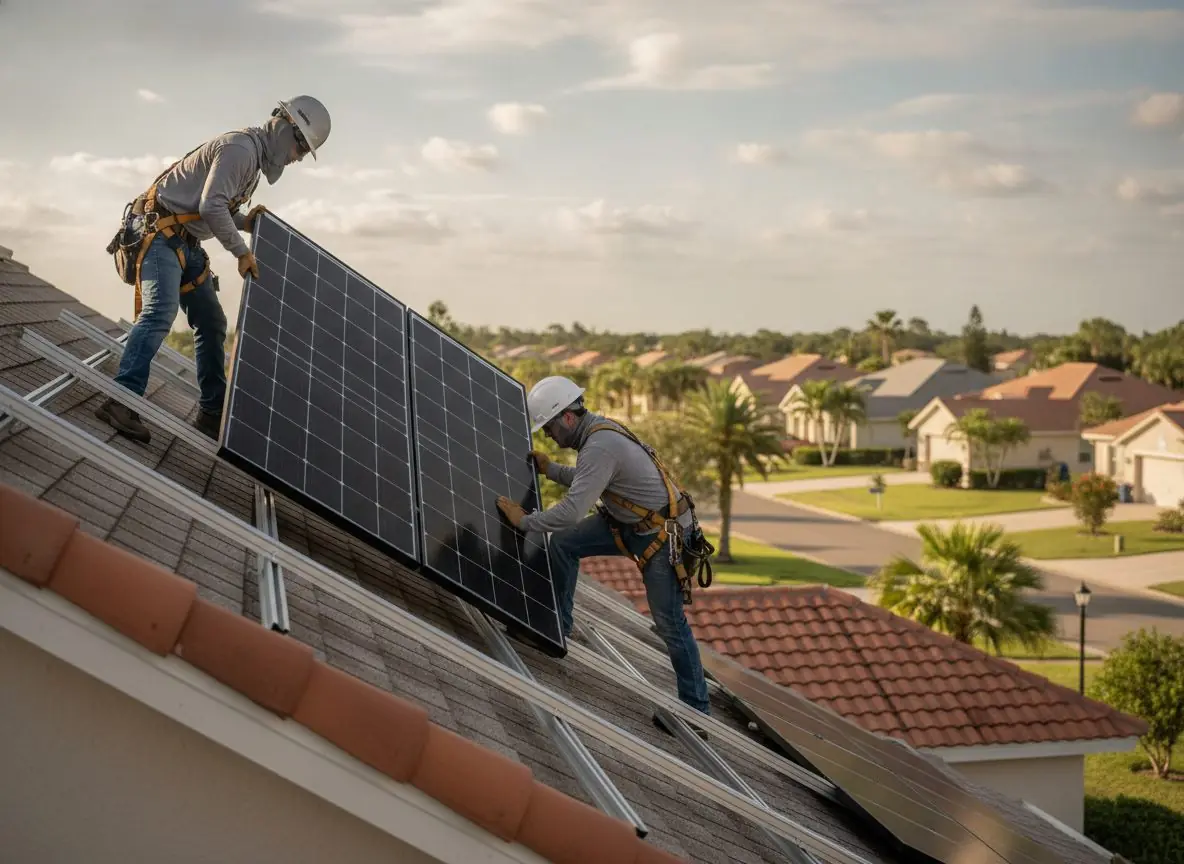
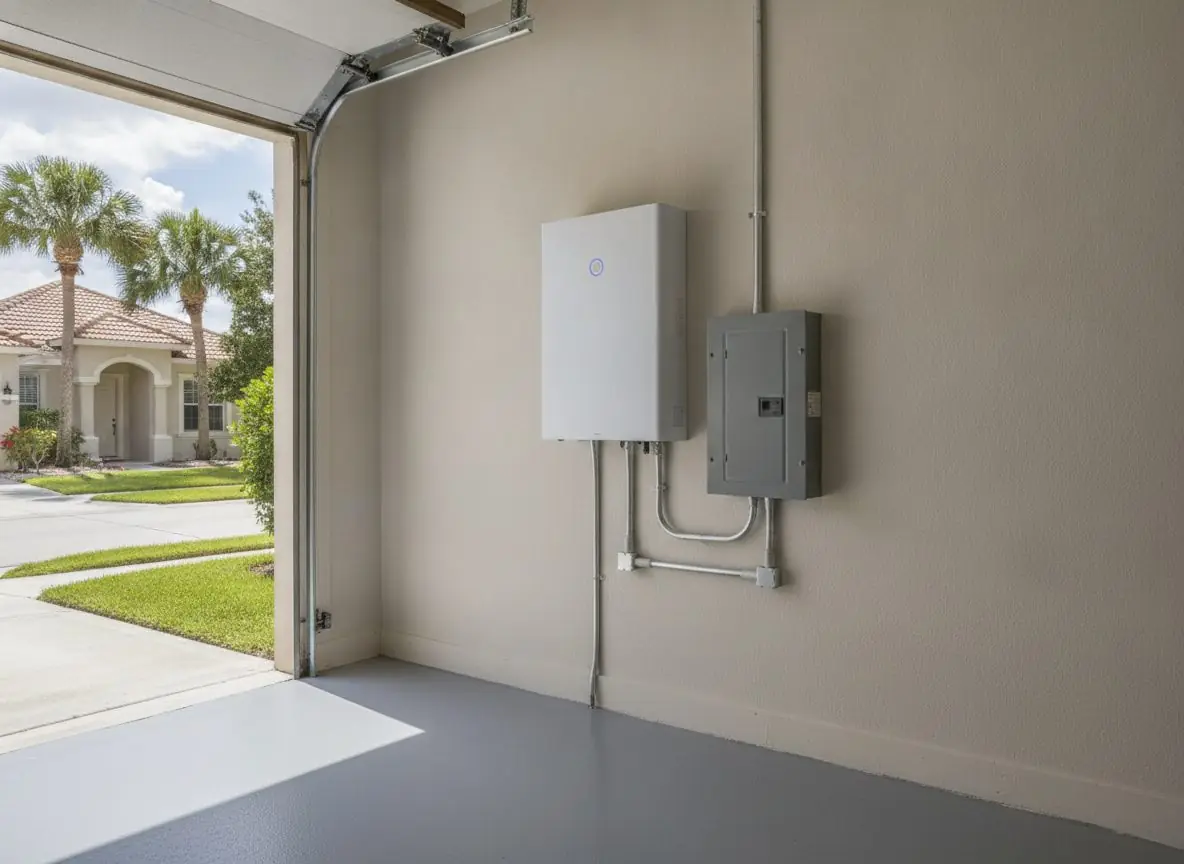
A home battery stores electricity — either from solar panels during the day or from the grid when rates are favorable — and discharges it when needed: during a grid outage, during peak-rate hours if your utility has time-of-use pricing, or simply to use more of your own solar production in the evening after the sun goes down. Paired with solar, a battery lets you store daytime production instead of sending all of it back to the grid. Without solar, a battery can still provide backup power, but it only stores what it's charged from the grid ahead of time, so its practical value during an extended outage is more limited than a solar-charged system.
Whole-home backup vs. partial (critical-loads) backup
This is the most important sizing decision. A single battery unit typically cannot power an entire home's air conditioning, water heater, and everything else at once for very long — most residential battery installs are configured as critical-loads backup, meaning a subpanel is wired to keep specific circuits running: refrigerator, some lighting, well pump if you have one, medical equipment, internet/router, and maybe one AC zone. Whole-home backup for everything, including full HVAC, generally requires multiple battery units and a larger, more expensive system. Deciding what actually needs to stay on during an outage — before sizing the system — is the single most useful conversation to have with an installer.
What it costs to run — and the incentive picture
Battery storage is a significant additional cost on top of a solar system, or as a standalone addition to an existing solar or non-solar home. As of 2026, there is no federal tax credit for a homeowner purchasing battery storage outright — that credit expired with the rest of the federal residential solar credit on December 31, 2025. Florida's property tax exemption and sales tax exemption still apply to battery storage installed as part of a qualifying system, which does reduce the effective cost somewhat. Manufacturer-specific rebate programs may exist separately from tax credits and change over time. For the full, current picture, see our Solar Incentives in 2026 guide.
Battery vs. a gas generator
- Noise and fuel. A battery is silent and needs no fuel delivery or storage, unlike a portable or standby gas generator.
- Automatic switchover. Most battery systems switch over automatically within a fraction of a second during an outage; a portable generator requires manual setup.
- Duration. A generator with fuel on hand can often run longer than a battery alone, especially for whole-home loads; a battery paired with solar can recharge itself during daylight hours in a multi-day outage, which a generator cannot do without more fuel.
- Upfront cost. A quality standby generator and a home battery system are both significant investments — neither is the cheap option, and the right choice depends on what you're trying to protect against.
Is it worth it for your household?
Consider a battery seriously if: you've experienced multi-day outages after past storms, you have medical equipment or medication that needs reliable refrigeration/power, you work from home and need internet/router power to keep functioning, or you already have or are adding solar and want to use more of your own production. It may be less of a priority if you have a reliable generator already, or if your household's critical needs are modest enough that a smaller backup solution would suffice.
Recommended next step
A real recommendation depends on your household's actual critical loads and your roof's solar potential if you're pairing the two. Compare that directly against solar-only in our Solar + Battery vs. Solar Only guide.
Request a Free Solar Estimate